


Thigh Lift Recovery: What to Expect Week by Week

A thigh lift changes an area of the body that is almost constantly in motion. You use your inner thighs when you walk, sit down, get out of bed and even shift your weight from one leg to the other. That makes recovery less about staying completely still and more about learning how to move carefully while the incisions heal.
At PURE Plastic Surgery in Miami, FL, double-board-certified plastic surgeon Dr. Natalia Vidal prepares patients for the recovery process well before surgery. If you’re planning a thigh lift around work, travel or an upcoming event, the timeline below can help you understand what the first several weeks may look like.
Thigh Lift Recovery Milestones
- Days 1 to 3: Swelling and discomfort are most pronounced
- Week 1: Drains may be removed; lymphatic massages begin
- Week 2: Many patients transition to a shorter compression garment
- Week 3: Most patients return to desk work after two to three weeks
- Weeks 4 to 6: Everyday activities feel increasingly normal
- Weeks 6 to 8: Lifting restrictions may be eased; activity continues to increase
- Beyond week 8: Gradual return to unrestricted exercise as cleared by Dr. Vidal
Why Thigh Lift Recovery Demands Careful Attention
Thigh lift recovery requires more attention and care than most body contouring procedures, and the reasons are anatomical.
The incisions are made either in the groin crease or along the inner thigh (depending on the technique used), both high-friction areas prone to warmth and moisture. Unlike a tummy tuck, where you can hunch forward to avoid pulling on the stitches, there's no neutral position that takes pressure off the inner thighs completely, so even the most basic movements will strain the surgical site to some degree.
On top of that, the legs are situated below the heart, which makes healing more difficult. Gravity pulls fluid downward, increasing swelling, and the lymph nodes responsible for draining excess fluid are in the groin, right where surgery just happened. So the body's drainage system is temporarily disrupted in the exact area that needs it most.
That combination is why thigh lift recovery requires more attention and more patience than many patients expect. But the process is manageable with the right care.
Week 1: Move Carefully & Protect Your Incisions
After a thigh lift, you go home later the same day. You’ll need someone to drive you home or back to your hotel, since the anesthesia can make you groggy. You’ll also experience some discomfort and swelling in the treated area.
All of that is fairly standard.
What differs after thigh lift surgery is how much help you’ll need with basic movement for the first few days.
"Thigh lifts aren’t that painful, but there’s a lot of tightness, and they’re a little uncomfortable because the scar is in the groin," says Dr. Vidal. "When walking, when sitting, when getting up from the bed, it's an area that you're going to be moving, so you need someone to help you."
Dr. Vidal has helped hundreds of patients through the thigh lift recovery process, so she has numerous tips for making it a little more manageable. Her most important one is this: Whenever you’re moving, imagine your legs are tied together. Take short steps when walking. To get out of bed, swing your legs to the edge first so you aren’t spreading them apart.
“Minimizing tension is how you prevent scars from widening or wounds from opening,” she explains.
During the first week, you’ll also have drains, typically one in each thigh, to collect excess fluid. Some patients might need to leave drains in for two or three weeks, but this varies depending on how your body heals. Dr. Vidal will assess fluid output at your post-op appointments to determine the most appropriate time for drain removal.
Weeks 2-3: Control Swelling As You Become More Mobile
Even as movement becomes easier, managing swelling remains one of your biggest recovery priorities.
Once the drains are removed, lymphatic drainage massage starts. “Lymphatic massage is more important than ever with this type of surgery,” says Dr. Vidal. For thigh lift patients, she prescribes what she calls the "rule of seven," a structured 21-session protocol:
- First seven sessions: One massage a day for the first week.
- Next seven sessions: One massage every other day for two weeks.
- Final seven sessions: One massage per week until you've completed all 21.
Your lymphatic massages will cover the entire leg, from the foot to the groin, to help with drainage. Gravity pulls fluid downward, so it’s important to move everything back up to the lymph nodes. Otherwise, you might see excessive swelling in the feet and ankles.
Full-leg compression is used for this same reason.
“I’m going to put you into a compression garment that goes from the toe to the upper thigh,” says Dr. Vidal. “We want compression below the knee, all the way to the waist. By week two, if everything looks good, you can transition to a shorter garment.”
Weeks 4-6: What a “Return to Normal” Looks Like
By weeks four to six, most patients are moving much more naturally. You should be back at work, driving, running errands and handling most of your usual day-to-day activities without thinking quite so much about every movement.
Feeling normal and being fully healed are not quite the same thing, however. A “return to normal” at this stage still comes with some guardrails, including:
- Lifting restrictions until week 6-8
- No nicotine
- Limited alcohol
- No deep squats, lunges or wide-legged stretches
Even when you feel capable of doing more, activity should be increased gradually. Giving the incisions additional time to heal reduces the risk of poor wound healing or separation.
To further promote healing, you’ll also continue to wear compression garments and keep up with your lymphatic massages as directed by Dr. Vidal. “For six weeks, I want you in your compression garment at all times,” she says. “After six weeks, you can wear it for 12 hours a day.” You might notice that on days you're more active, swelling is worse in the evening, but staying consistent with both can help manage fluid buildup for a comfortable recovery.
Weeks 6-8 and Beyond: Seeing Your Final Results
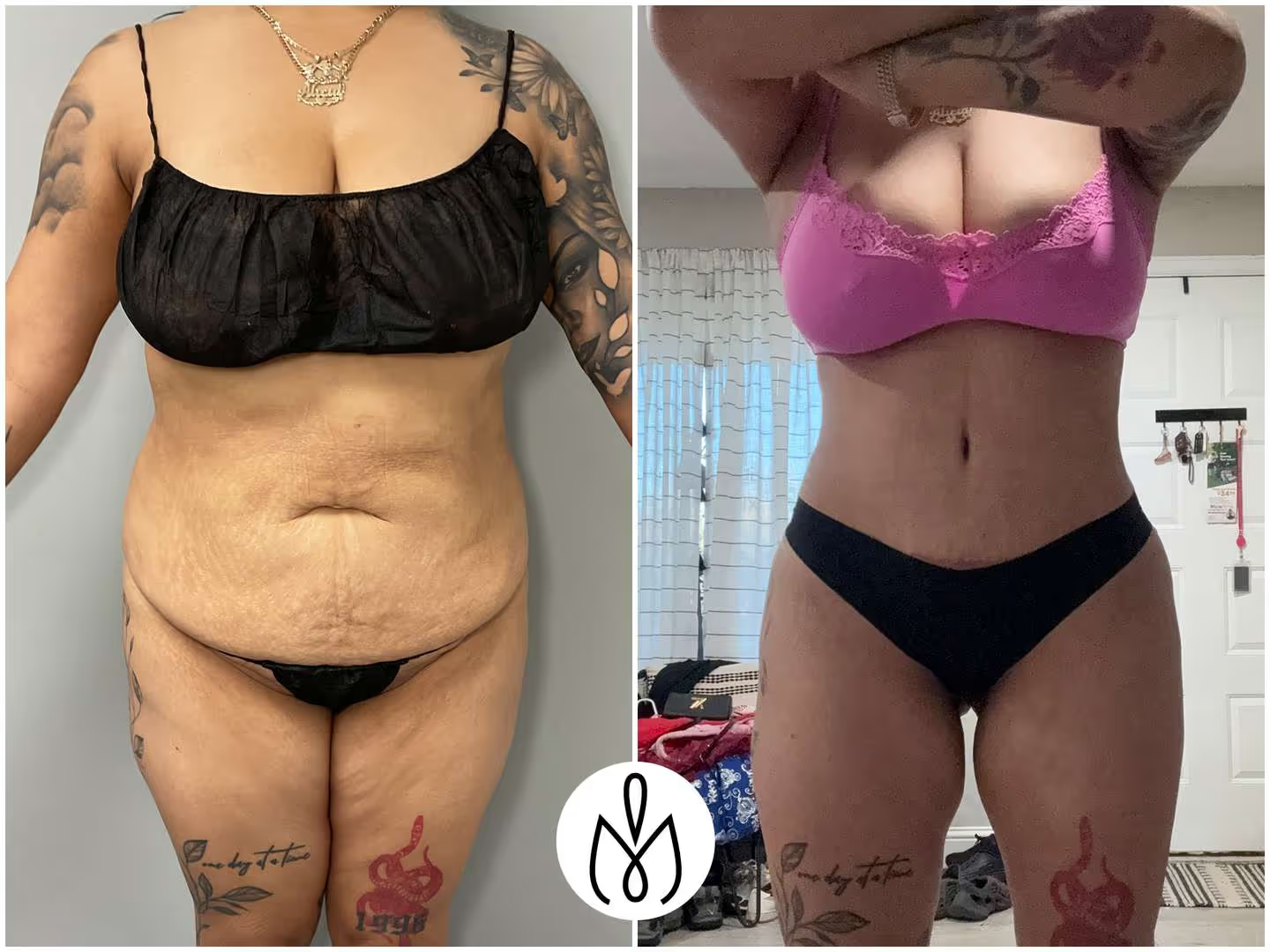
By the six- to eight-week mark, most activity restrictions are lifted and your final results have started to take shape. You’ll notice smoother thighs from groin to knee, less chafing and a more proportional lower body appearance. These results will continue to refine over the next six to 12 months as any residual swelling resolves.
Your incision lines will also continue to mature, flattening and fading so they blend in better with the surrounding skin. Scar visibility ultimately depends on the technique used and your post-op incision care, but most patients are happy to trade an incision line for firmer, smoother contours that give them the confidence to wear shorts, skirts and dresses again.
PURE Patients Also Ask:
“How do I pee after a thigh lift?”
Because of the incision location, going to the bathroom after a thigh lift can be tricky at first. Some patients use walkers to help lower themselves onto the toilet, while others prefer to avoid sitting or squatting completely and use female urinals instead. No matter which method you choose, clean and dry the area thoroughly afterward to reduce the risk of infection.
“How can I tell if my incision is healing well?”
Because the groin is such a high-movement area, thigh lift incisions are prone to opening back up, a complication known as wound dehiscence. “No matter how careful you are, there’s some friction and tension,” explains Dr. Vidal. Signs to look for include increased drainage, spitting sutures and gaps along the incision line. Fortunately, minor cases are typically manageable with topical ointments and moist-to-dry wound dressings. If you notice your incisions starting to open, call our office right away to start treatment as soon as possible.
More on Wound Dehiscence: Hump Day Live With Dr. Earle
“Should I sleep on my back or stomach?”
Most patients find sleeping on their back with a pillow or two under their legs to be the most comfortable position. It keeps the legs slightly elevated, which helps with swelling, and it avoids putting pressure on the inner thigh incisions. Some patients also place a pillow between their knees to keep their legs from pressing together overnight.
See What’s Possible at PURE
If loose skin along your inner thighs is keeping you from feeling comfortable in the clothes you want to wear, a thigh lift can help you achieve the firmer, smoother contours you’ve always wanted. Meet with double-board-certified plastic surgeon Dr. Natalia Vidal at PURE Plastic Surgery in Miami, FL, to explore your options and get a surgical plan tailored to you. Call us at 305-230-4326 or use our virtual consultation tool to get started!
Further
Reading






















































Media
PURE Plastic Surgery and our incredible team of surgeons have been recognized in magazines and news publications all around the world.


