



What Makes Pure Plastic Surgery One of the Safest Practices in Miami, FL
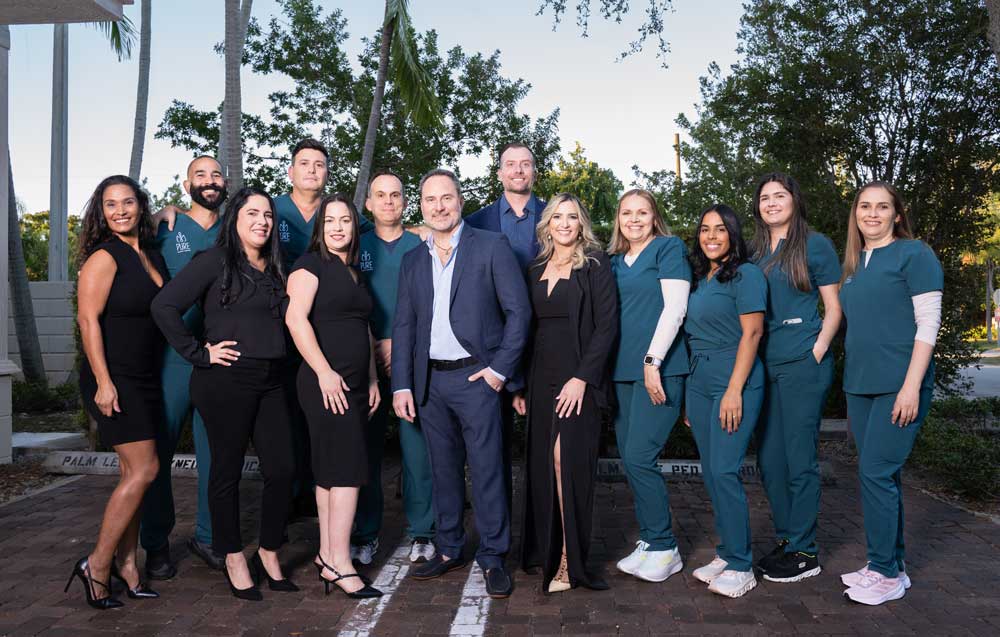
Pure Plastic Surgery in Miami, FL builds safety into every layer of a patient's surgical experience: a Joint Commission–accredited facility, double board-certified surgeons, thousands of documented procedures, and complication rates that run consistently below national averages. None of these pieces work alone. A board-certified surgeon operating in an uncertified facility, or a certified facility staffed by inexperienced providers, both leave gaps. Pure's approach is to close every one of those gaps at once.
Is Pure Plastic Surgery's facility actually certified, and does that matter?
Pure's surgery center holds Joint Commission accreditation (JCAHO), the same certification standard used to evaluate hospital operating rooms. Florida law does not require an office-based surgical facility to carry this certification (it's optional) and most practices in the state operate at a lower, minimum baseline instead. Pure pursued it anyway because it is the highest level of safety certification an outpatient surgical setting can hold.
The facility is also owned and operated solely by the practice, not a space surgeons rent out occasionally. That means the same anesthesia providers and surgical staff work together every single day, learning each other's standards and routines rather than coordinating with unfamiliar teams case by case.
Sterilization protocols go beyond standard practice. Before surgery, patients get a Mupirocin nasal antibiotic treatment and a chlorhexidine-based body wash to reduce bacteria that commonly causes infection. In the operating room, a UV light sterilizes the space minutes before each patient enters, and IV antibiotics are given during surgery followed by a week of oral antibiotics afterward. For procedures involving liposuction, a cell saver device separates red blood cells from the fluid that's removed and returns them to the patient as an auto-transfusion, reducing total blood loss.
Are Pure's surgeons board certified?
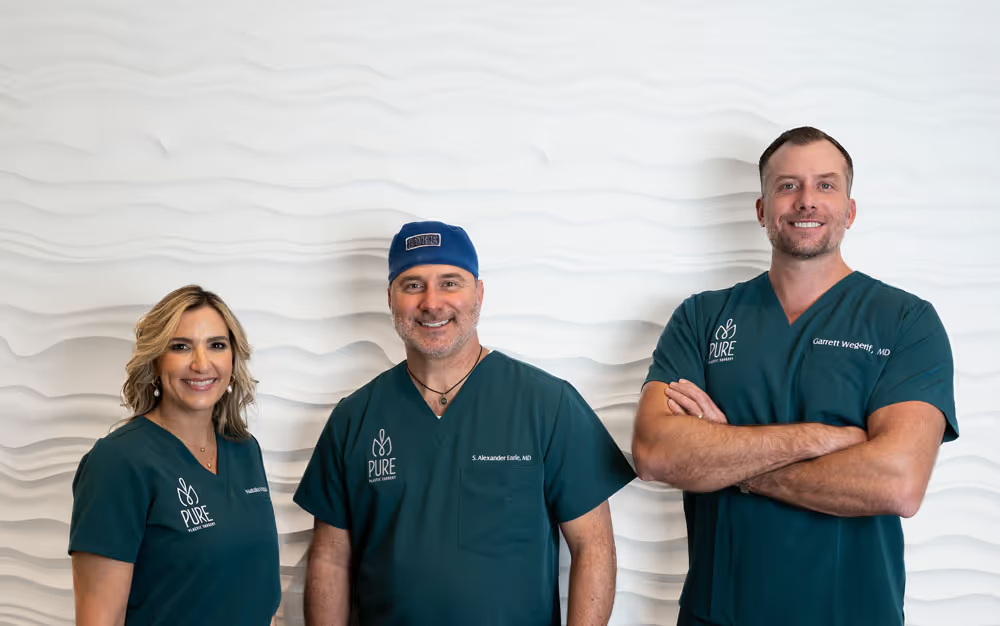
All three surgeons at Pure are double board certified: certified by the American Board of Plastic Surgery and also by the American Board of Surgery. The American Board of Plastic Surgery (ABPS) matters specifically because it's the only plastic surgery credential recognized by the American Board of Medical Specialties. The American Board of Cosmetic Surgery, despite sounding similar, is not recognized by the ABMS. It's allowed under Florida law, but it doesn't carry the same rigor of training, case review, and oral board examination that ABPS certification requires.
You can verify any surgeon's ABPS status directly: search the surgeon's name on the American Board of Plastic Surgery's website. If the name doesn't appear, the surgeon isn't certified by that board. If it does appear, check whether the certification is listed as active. This verification step matters because "board certified" has started appearing in marketing from aestheticians and nurse practitioners too, and the term alone doesn't tell you which board, or whether it's the one that matters for surgery.
How much surgical experience backs up Pure's safety record?
Pure performed 411 BBLs in 2025 alone, and the practice's lead surgeon has completed over 3,000 BBLs across his career, more than 2,000 of them using ultrasound guidance. He began using ultrasound-guided fat transfer in September 2019, making Pure one of the earliest adopters of the technique in the country. Pure Plastic Surgery became the first training center for ultrasound-guided BBLs in the US, teaching other surgeons the technique to help lower the national complication rate for the procedure.
That experience is documented, not just claimed. The practice's ultrasound-guided BBL data on over 1,800 patients was published in the Aesthetic Surgery Journal in 2024, reporting 0% fat embolism and 0% death across that patient series.
Ultrasound guidance matters because a BBL was historically a blind procedure where surgeons placed fat by feel alone. If fat is placed into or beneath the gluteal muscle instead of in the safer layer between skin and muscle, it can enter a major vein and travel to the lungs, causing a fat embolism that can be fatal. Ultrasound imaging lets the surgeon see exactly where the cannula is in real time and confirm it stays in the safe space between skin and muscle.
How do Pure's complication rates compare to national averages?
Lower, across nearly every metric the practice tracks. Here's the comparison, procedure by procedure:
- BBL mortality: The often-cited "1 in 3,000" statistic comes from a 2017 study and is outdated; today's national average for BBL mortality is closer to 1 in 15,000 at reputable practices using modern technique, similar to other cosmetic surgeries. Pure's BBL mortality rate is zero — no fatalities, ever.
- BBL infection rate: National average is approximately 10%. Pure's 2025 rate was 0.5%, down from roughly 6% five years ago and continuing to decline each year.
- Blood transfusion rate: National average for BBL patients is 2–3%. Pure had one transfusion out of 411 BBL patients in 2025; a rate of 0.2%.
- BBL revision rate: National average is 10–15%. Pure's 2025 revision rate was 3%, the lowest in the practice's history, down from about 6% in 2020 and 5% in 2024.
- Fat retention after BBL: National average is approximately 50%. Pure's retention rate runs closer to 70%, attributed to thoroughly separating fluid from fat before transfer.
- Seroma rate: About 10%, in line with the national average. This is one area where Pure hasn't been able to improve beyond typical outcomes.
- Breast augmentation complications: Infection runs roughly 1%; hematoma requiring a return to the operating room is under 1%, amounting to about two cases a year.
These numbers improve year over year because of specific changes: VASER ultrasound-assisted liposuction (less bleeding, less inflammation, better skin retraction), refined patient selection, and more surgical volume and experience.
What safety protocols protect patients before, during, and after surgery?
Every patient goes through medical clearance before a surgery date is confirmed: labs, an EKG, and clearance from a primary care doctor, plus cardiac or neurological clearance if indicated. Patients are asked to complete this 2–3 weeks before surgery so the surgical team has time to review it.
BMI limits exist because complication rates rise sharply above certain thresholds. The limit is 30 for procedures like a BBL or lipo 360, up to 33.5 for body contouring after massive weight loss (with a recommendation to get under 30 when possible), because higher BMI increases the risk of blood clots, wound breakdown, and respiratory complications under anesthesia.
Certain procedure combinations are avoided on purpose. Pure does not combine a tummy tuck with a BBL, even though some practices will, because combining them significantly raises the risk of blood transfusion and blood clots. The two procedures also require opposite post-op positioning, which complicates recovery. Surgery time is generally kept under five hours total, since research shows complication rates, including wound healing issues, infection, and blood clots, rise notably past that point.
Blood clot prevention runs through every surgery: a sequential compression device called the VenaPro is used on the legs during and after surgery, patients are required to walk at regular intervals starting the day of surgery, and for higher-risk patients, a blood thinner injection (Lovenox) is added for about two weeks. Patients undergoing surgeries like tummy tucks or BBLs are required to stay in Miami a minimum of five days post-op specifically to reduce blood clot risk before flying home.
Patient selection is itself a safety protocol. Pure's surgeons will decline to operate on candidates who don't meet medical criteria, even when a patient has already been scheduled, because an office-based outpatient setting isn't appropriate for every medical history.
After surgery, support continues around the clock: a 24/7 emergency on-call line, a HIPAA-compliant messaging system for non-urgent questions and photos, and CosmetAssure, a secondary insurance that helps cover costs if a complication requires an ER visit in the first 30 days after surgery.
Frequently Asked Questions
Why shouldn't I worry about the "1 in 3,000" BBL mortality statistic I've seen online?
That figure comes from a 2017 study and reflects outdated technique, not current practice. Today's national average for BBL mortality at a reputable practice using modern ultrasound-guided technique is closer to 1 in 15,000, similar to the risk profile of other cosmetic surgeries like a tummy tuck. Pure's own BBL mortality rate has remained at zero.
How long do I need to stay in Miami after surgery for safety reasons?
A minimum of five days after surgery, which typically means about a week total once you include your pre-op day and surgery day. Leaving earlier raises the risk of complications, particularly blood clots, which are most likely to develop in the first two weeks after surgery. Patients traveling from outside the US or Canada are generally asked to stay longer, sometimes up to two weeks, because of the added blood clot risk from a long flight home.
Why does Pure Plastic Surgery perform procedures under general anesthesia rather than local anesthesia?
Because procedures like tummy tucks, lipo 360, and BBLs require more numbing medication than is safe to use under local anesthesia alone. Using too much local anesthetic risks lidocaine toxicity, which can affect the heart and nervous system and, in rare cases, be fatal. Performing these surgeries under general anesthesia keeps lidocaine use at zero and allows for a more thorough, more comfortable procedure.
What happens if I'm not a safe candidate for the surgery I want?
The surgical team will tell you directly, even after a procedure has already been scheduled. Patient selection criteria exist specifically because Pure operates in an office-based outpatient setting rather than a hospital, and certain medical histories, uncontrolled conditions, or combinations of procedures carry too much risk for that setting. Knowing when to say "not yet" or "no" is treated as a safety decision, not a rejection.
Do Pure surgeons have hospital privileges?
All the double board-certified plastic surgeons at Pure have hospital privileges at nearby major hospitals. All hospitals are under 10 minutes away from the clinic. In the 8 years and approximately 8000 cases performed at Pure, only 3 patients have required transport to the hospital from the facility. If a patient is in the hospital, our surgeons make sure that the patient is taken care of and they coordinate care with the hospital team. Our surgeons are able to visit the patients; however, the hospital staff take full charge and responsibility of the patient’s care while in the hospital. Pure assumes the responsibility once again upon the patient's discharge.
Further
Reading






Media
PURE Plastic Surgery and our incredible team of surgeons have been recognized in magazines and news publications all around the world.